
Digital Identity Validation: The Digital Identity Spine Theory and the Gmail-UID Connection
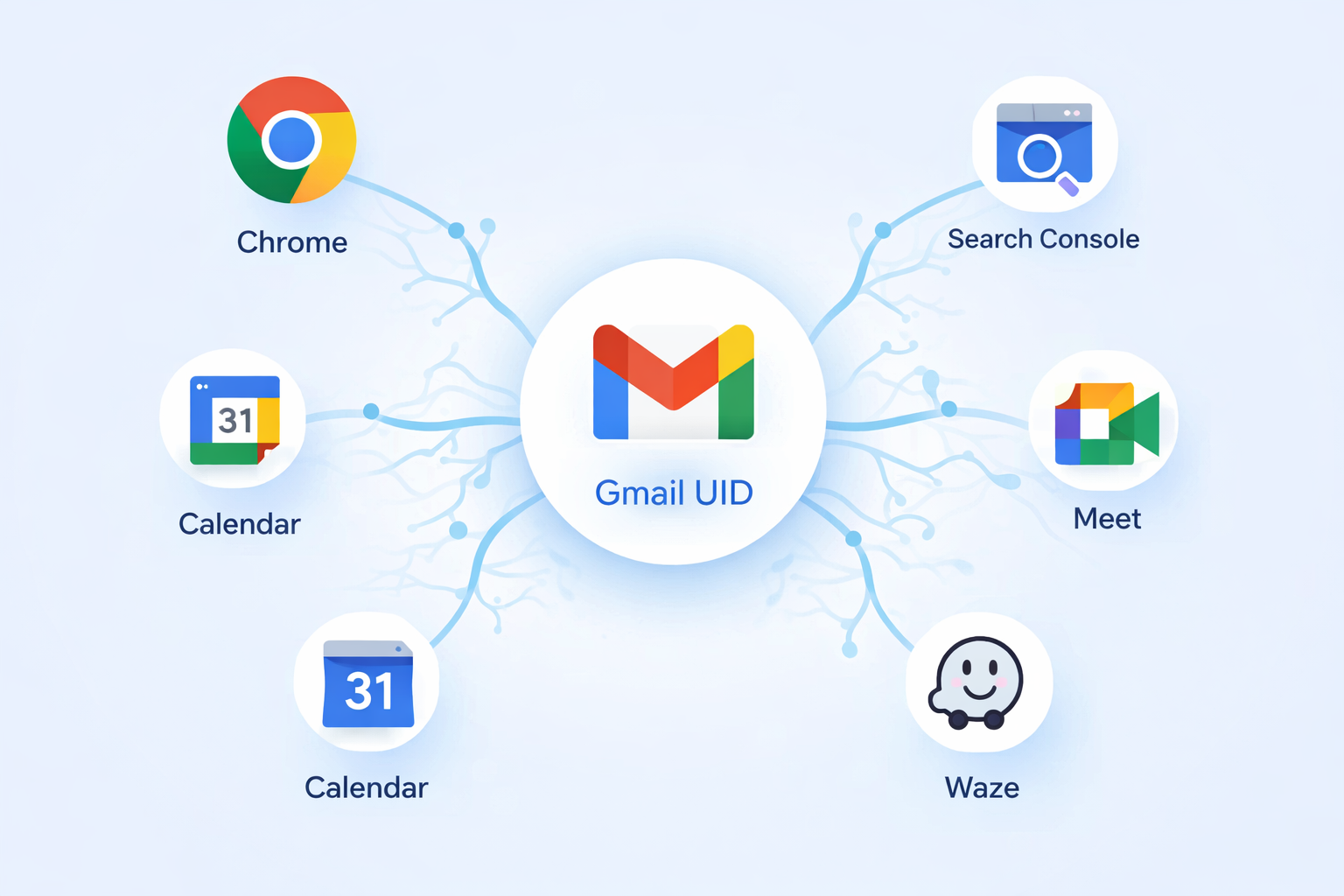
This page presents the comprehensive thesis on how Google validates digital identity. At the heart of this model lies Gmail as the key Identity UID—connecting Chrome, Search Console, Calendar, Meet, and Waze to create a consistent, unfalsifiable 'Digital Identity Spine.' The Digital Identity Spine theory deconstructs the system's layers, explains the identity validation process, and proposes a new paradigm for understanding E-E-A-T and how Google identifies true expertise.
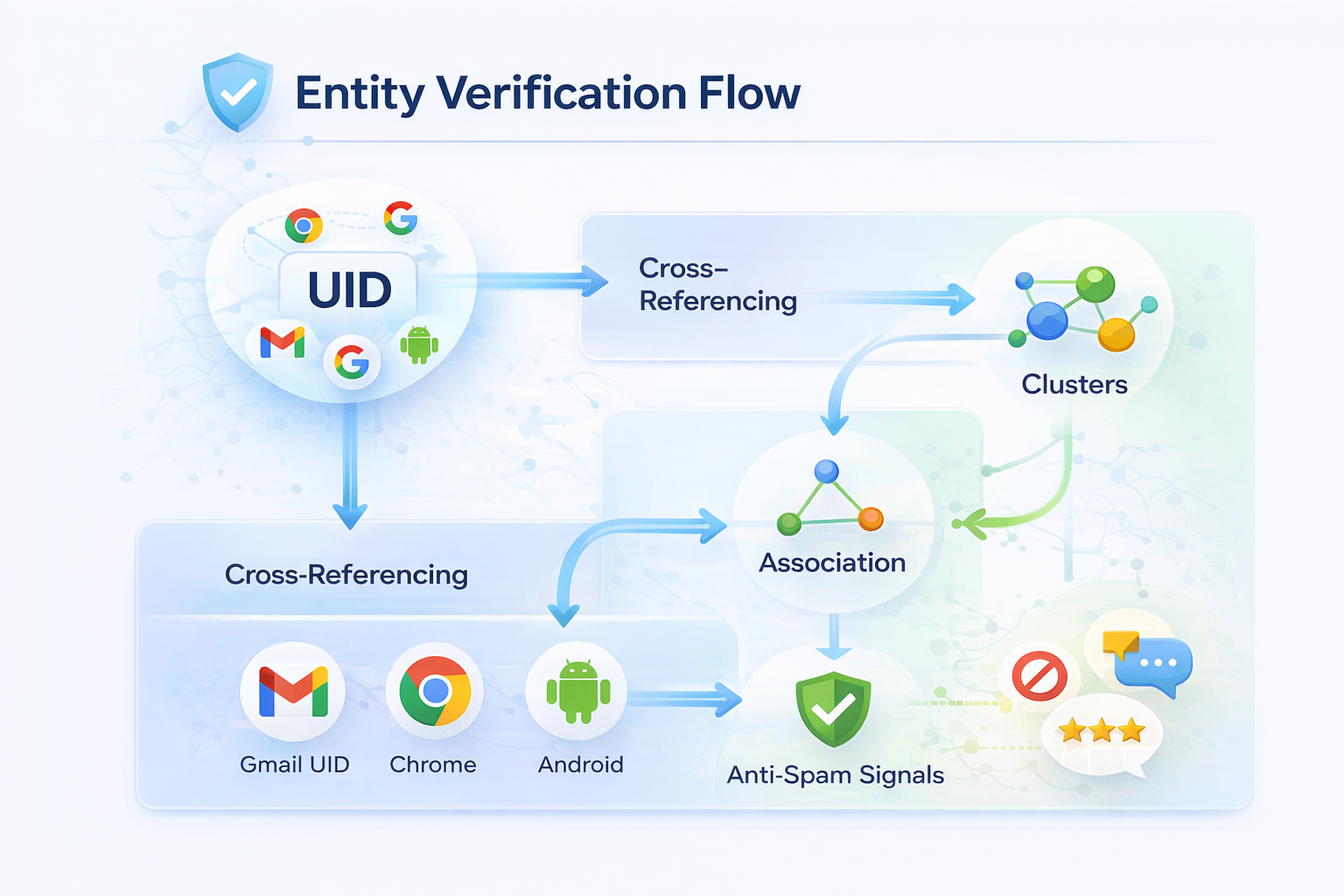
how Google identifies true expertise. Appendix A: Technical Verification
By: Izzik Fayzak, SEO Strategist and Digital Entity Researcher.
The thesis presented here is the result of years of research and analysis in the field of Entity Engineering. My goal in writing this document is to challenge the current perception of the E-E-A-T model and to expose the hidden 'Spine' that allows Google to validate our identities in an AI-driven world. As someone specializing in the intersection of data and human authority at FayzakSEO, I believe that understanding the role of the Gmail account is the key to unlocking the future of search.
The Role of the Gmail Account as a Central Identity Mechanism within Google's Ecosystem and its Impact on the E-E-A-T Model
The central premise of this article is that a Gmail account the foundation for all Google services functions as a Unified Identity Layer. This layer enables Google to collect, attribute, and analyze user activity patterns at the Entity level. By interlinking diverse services such as YouTube, Waze, Google Calendar, Google Maps, Chrome, and Android, Google constructs a behavioral, social, and professional network of signals. This network serves as the critical infrastructure for assessing an entity's Experience, Expertise, Authoritativeness, and Trustworthiness (E-E-A-T).
Furthermore, a defining characteristic of the Gmail account is its longevity. As a long-term asset that often accompanies a user for decades, it allows for the cumulative building of entity signals over time starting from a child’s first smartphone to their professional contributions as an adult.
תוכן עניינים
1. Introduction
In recent years, the E-E-A-T model has become a cornerstone of content quality assessment within Google’s search engine. While the model is often described as focusing on the content itself, in practice, it relies heavily on the understanding of Entities and the intricate relationships between them. This understanding requires a consistent identification mechanism, allowing Google to attribute digital activity to a specific individual across various platforms and over extended periods.
This article proposes that the Gmail account is the primary identity mechanism that facilitates this process.
2. Gmail as an Identity Layer
A Gmail account is far more than just an email service. It functions as:
- An Authentication Mechanism: Providing secure access across the web.
- A Unique Identifier (UID): Acting as a persistent digital fingerprint.
- A Cross-Service Synchronization Layer: Ensuring data flow between Google’s platforms.
- An Anchor for Device and App Interconnectivity: Linking hardware, applications, and behavioral activity.
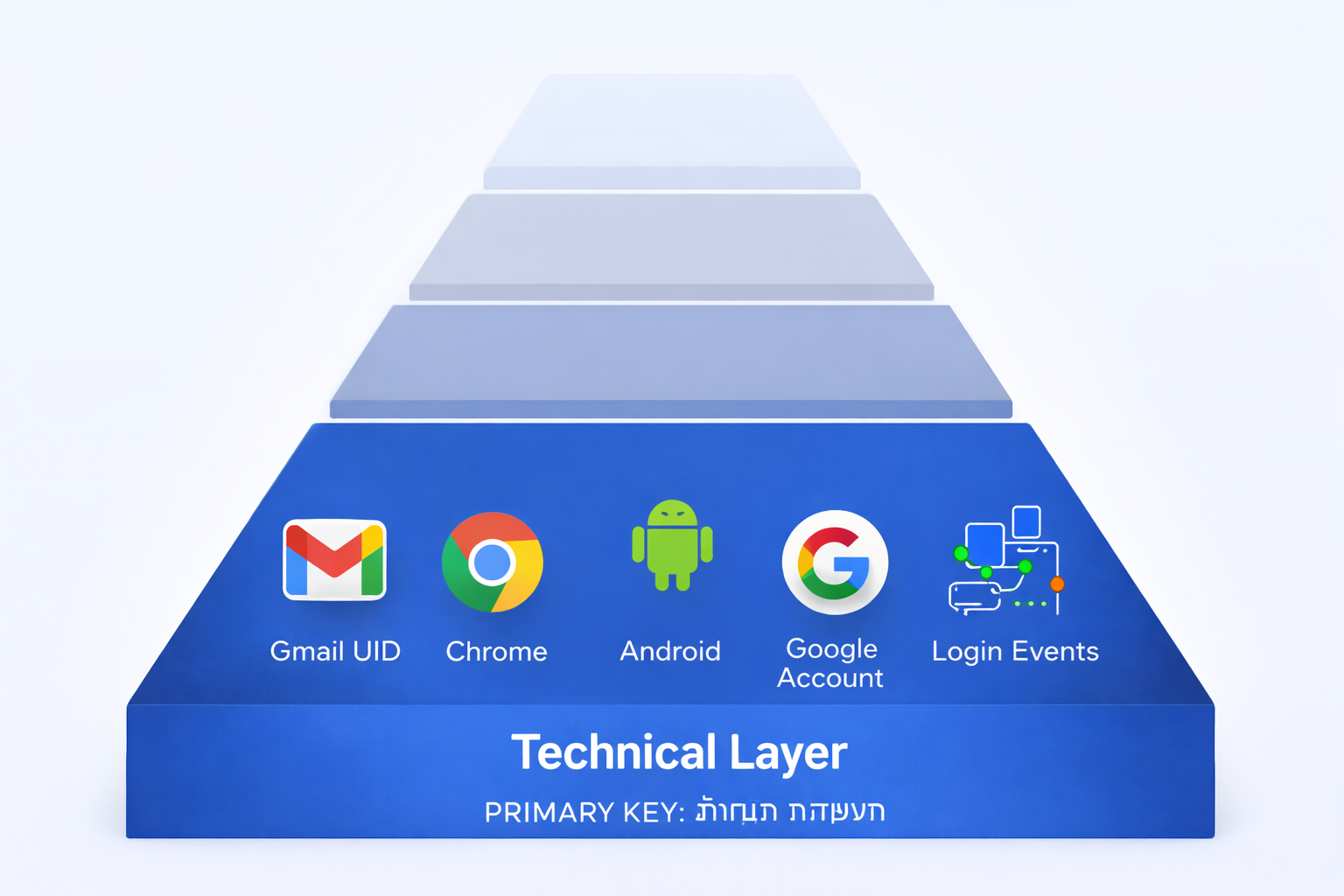
Across every Google service—YouTube, Maps, Waze, Calendar, Drive, Chrome, and Android—the user is prompted to connect via the same account. This creates a seamless and unified Identity Continuum.
3. Gmail as a Long-Term Identity Spine
One of the most prominent characteristics of a Gmail account is its stability and persistence over many years. Users tend to:
- Maintain one primary Gmail account.
- Use it as their central hub.
- Keep it active for a decade or even two.
- Link it to external services, apps, devices, and accounts.
Even if secondary accounts exist, the primary account carries: Cumulative history | Professional and social connections | Content interactions | Usage patterns | Professional activity | Long-term consistency.
This characteristic transforms Gmail into the Identity Spine—the backbone of digital identity enabling the construction of a rich, time-based entity model that cannot be faked or artificially accelerated.
3.1 The Formation of a Digital Fingerprint: Identity Built from Day One
In the modern digital era, online identity does not begin in adulthood or upon entering the professional world. In most cases, it starts between the ages of 7–10, when a child receives their first smartphone. To activate the device, download apps, and use the Play Store, a new Gmail account must be created often linked to a parent's Gmail for recovery and verification. This stage marks the official starting point of a digital identity that evolves naturally over the years.
3.1.1 Gmail as a Seed Identity
The initial account created for a child becomes the:
- Default account on the device.
- Source for contact synchronization.
- Foundation for app and game installations.
- Access point for YouTube, Maps, and other services.
- Recovery account connected to a parent's identity.
At this stage, an initial digital fingerprint is formed, including: App downloads | Gaming activity | YouTube history | Early Maps/Waze locations | Initial contacts | Basic content interactions.
3.1.2 Identity Evolution through Adolescence
As the child grows, the account grows with them:
- Phones change, but the account remains.
- Contacts accumulate.
- New applications are installed.
- YouTube history expands.
- Photos are archived in Google Photos.
- Documents are created in Drive.
- The account is used for registrations across various services.
3.1.3 Transition to Adulthood: Digital Identity Becomes Professional Identity
In adulthood, that same Gmail account is used for:
- Opening bank accounts.
- Academic registrations.
- Starting a business.
- Creating a Google Business Profile.
- Managing client communications.
- Scheduling meetings via Google Calendar.
- Business navigation via Waze.
- Professional interactions on YouTube and LinkedIn.
By this stage, the account is no longer just an "email account" it is a complete digital life sequence, built over a decade or two.
3.1.4 An Unfalsifiable Digital Fingerprint
It is impossible to fabricate:
- 15 years of contacts
- Device history
- Authentic human interactions
- Cumulative YouTube usage
- Waze travel history
- Real-world Calendar appointments
- Long-term professional connections
AI can generate content. AI cannot generate a digital life.
3.2 Zero-Click Context as an Indirect Metric for Authenticity and Professional Activity
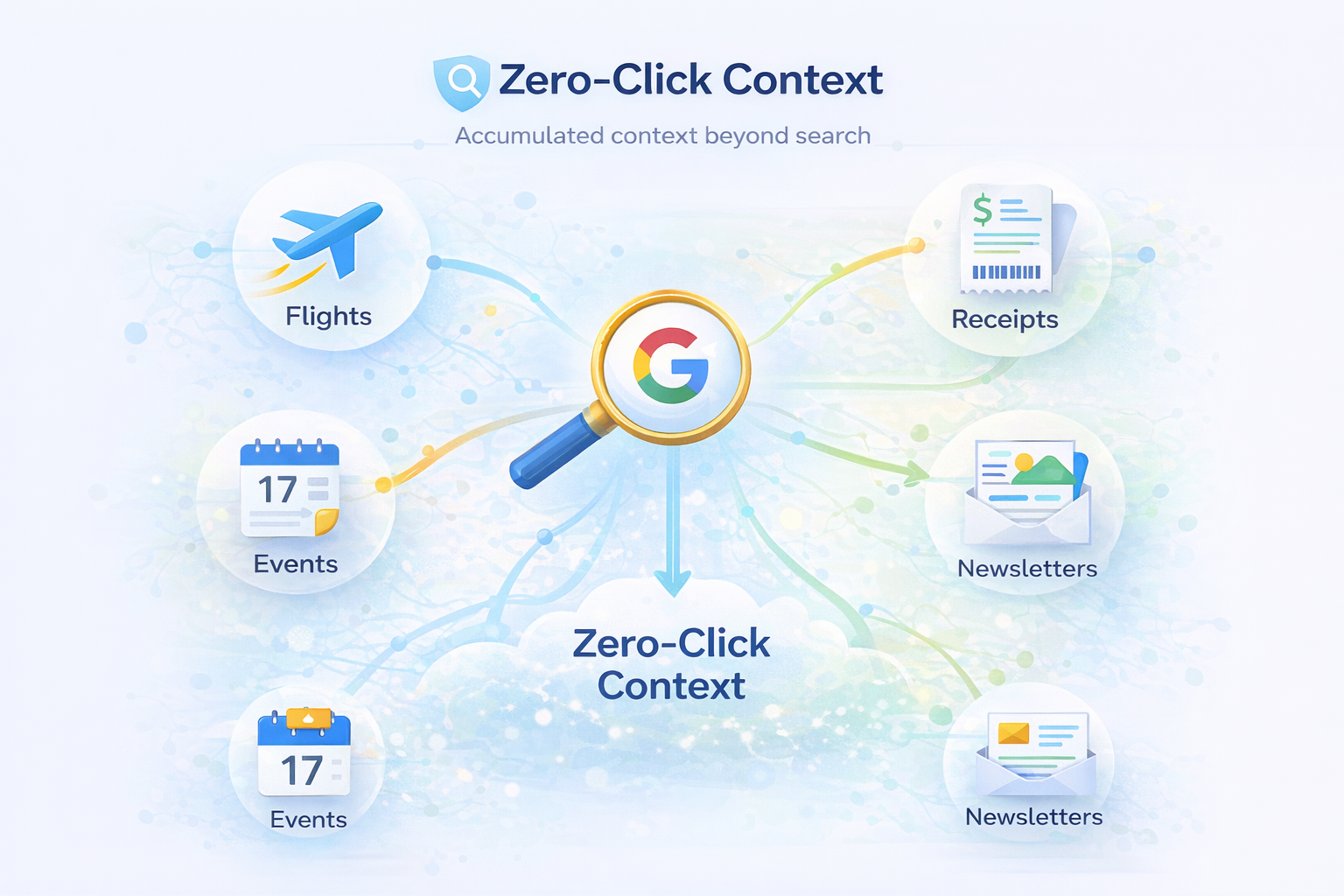
In the modern digital era, a significant portion of user online activity occurs without clicking on search results—a phenomenon known as Zero-Click. Many daily actions are performed within services, applications, and ecosystems without ever passing through a search engine.
Actions such as:
- Receiving booking confirmations and digital receipts.
- Flight tickets and boarding passes.
- Registrations for professional events.
- Subscribing to newsletters in specific expertise niches.
- Scheduling meetings and documenting travel.
- Utilizing business services and interacting with app content.
These actions create a cumulative context that defines a user’s interests, activities, and professional focus over time. Within a theoretical framework of entity validation, this data serves as an indirect metric for: Professional consistency | Niche engagement | Unfalsifiable real-world activity | Natural digital life patterns | Interpersonal connections and physical events | Search-independent activity sequences.
The implication is that even without direct interaction with search results, the sequence of digital activity generates an authentic context that distinguishes a real human entity from an artificial one.
Zero-Click Context reinforces the understanding that digital identity is not created solely from content—but from life itself: from actions, habits, connections, and cumulative behavior over years.
4. Inter-Service Connectivity: Creating an Activity Network
When a user operates across multiple Google services, data integration occurs across different layers:
4. Inter-Service Connectivity: Creating an Activity Network
When a user operates across multiple Google services, data integration occurs across various layers:
4.1 Communication Layer
- Gmail correspondence.
- Conversation metadata.
- Inter-account connections.
4.2 Behavioral Layer
- YouTube consumption history.
- Likes and comments.
- Browsing patterns.
4.3 Physical Layer (Location Layer) Waze navigation
- Location visits.
- Arrival and departure timing.
4.4 Organizational Layer
- Google Calendar events.
- Participant synchronization.
- Alignment of time, location, and activity.
4.4.1 Google Meet as a Hybrid Logical-Content Layer
Google Meet serves as a natural extension of the Organizational Layer. While Calendar documents the structure of a meeting (time, participants, context), Meet captures the verbal content through automated transcripts. Within a theoretical model of entity understanding, these transcripts may reflect: Authentic professional discourse | Use of advanced terminology | Complex explanations | Expert-to-expert interactions | Thought processes | Professional communication patterns.
This creates a bridge between "what was scheduled" and "what was actually said," serving as a powerful signal for Expertise and Experience.
4.5 Social-Professional Layer
- LinkedIn interactions (via cross-referencing).
- Tagging and mentions.
- Connections between experts.
When all these layers are connected to a single Gmail account, a complete entity network is formed.
5. The Activity Network as the Foundation of E-E-A-T
The E-E-A-T model relies on evaluating:
- Experience
- Expertise
- Authoritativeness
- Trustworthiness
An inter-entity network—based on authentic, consistent, and documented activity—provides high-fidelity signals across all four dimensions.
6. Applied Example: Four Entities in a Professional Meeting
When four experts:
- Correspond via Gmail
- Schedule a meeting in Google Calendar
- Arrive at the same location using Waze
- Co-consume professional content on YouTube
- Interact on LinkedIn
- Tag an additional expert
An Entity Cluster is formed. This professional cluster serves as a powerful, multi-layered E-E-A-T signal.
7. The Evolution of Entity Validation in the AI Era
In the past, entity validation relied on:
- Backlinks
- Mentions
- Authoritative sources
- Structured data
In the age of AI, high-quality content can be synthetically generated. Therefore, a temporal dimension is now required—an unfalsifiable history.
8. Long-Term Digital Identity as an Authenticity Metric
A digital identity constructed over many years reflects:
- Consistency
- Genuine connections
- Human interactions
- Cumulative activity
- Natural history
A primary Gmail account embodies all of these elements.
9. Conclusion
Gmail is far more than an email service; it is a central, continuous, and long-term identity layer that enables the construction of a rich, consistent, and time-based entity model.
In an era where AI can generate content, unfalsifiable signals history, consistency, and human connections become critical for identifying and validating a true entity. Therefore, understanding the role of Gmail as an Identity Spine is essential to understanding how entities are evaluated and verified in the modern digital age.
Legal Disclaimer and Terms of Use
The content presented in this article, including the Digital Identity Spine theory, the Identity Spine model, and all accompanying visual models, represents the independent research, professional analysis, and theoretical thesis of the author alone.
External Analysis Only: All conclusions are based on reverse engineering of public systems, analysis of public patents, and observation of actual algorithmic behavior. No internal, confidential, or non-public information of any kind was used in this research.
No Official Affiliation: This content should not be viewed as an endorsement, representation, or official position of Google or any of its representatives. The author is not affiliated with Google, does not represent the company, and does not claim access to any non-public information.
Copyright and Intellectual Property: The terms "Digital Identity Spine" and "Identity Spine," as defined and explained in this article, along with their associated conceptual models, are the original developments of Izzik Fayzak and are protected by copyright law. While the term "Zero-Click Context" may appear online in various contexts, its unique definition, interpretation, and application within the framework of the Digital Identity Spine model as presented here are the original work of the author and are protected by copyright.
Purpose of Information: This information is provided as a service to the SEO and digital marketing community for educational and research purposes only. It should not be construed as a recommendation to perform actions that violate Google's Webmaster Guidelines or any other relevant regulations.